


Page 204 - Freshwater-Biology-and-Ecology-Handbook
P. 204
CHAPTER 4     3.4.4 – 3.4.6


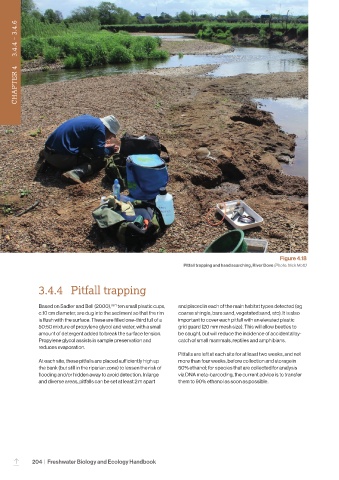
                                                                                                   Figure 4.18
                                                                  Pitfall trapping and hand searching, River Dove (Photo: Nick Mott)


               3.4.4  Pitfall trapping


                                        (67)
               Based on Sadler and Bell (2000),   ten small plastic cups,   and placed in each of the main habitat types detected (eg
               c.10 cm diameter, are dug into the sediment so that the rim   coarse shingle, bare sand, vegetated sand, etc). It is also
               is flush with the surface. These are filled one-third full of a   important to cover each pitfall with an elevated plastic
               50:50 mixture of propylene glycol and water, with a small   grid guard (20 mm mesh size). This will allow beetles to
               amount of detergent added to break the surface tension.   be caught, but will reduce the incidence of accidental by-
               Propylene glycol assists in sample preservation and   catch of small mammals, reptiles and amphibians.
               reduces evaporation.
                                                                Pitfalls are left at each site for at least two weeks, and not
               At each site, these pitfalls are placed sufficiently high up   more than four weeks, before collection and storage in
               the bank (but still in the riparian zone) to lessen the risk of   50% ethanol; for species that are collected for analysis
               flooding and/or hidden away to avoid detection. In large   via DNA meta-barcoding, the current advice is to transfer
               and diverse areas, pitfalls can be set at least 2 m apart   them to 90% ethanol as soon as possible.


            204  |  Freshwater Biology and Ecology Handbook
      –

