


Page 202 - Freshwater-Biology-and-Ecology-Handbook
P. 202
CHAPTER 4     3.4.3  3.4.3  Hand searching             At each sample station one or more of the following

                                                              techniques are used to find animals, depending on the
            Hand searching can be a very effective method for
                                                              habitats present:
            sampling riparian invertebrates, particularly in terms of
                                                              •  Soft sediments are trampled or patted, and surface-
            recording the smaller, cryptic species and those which
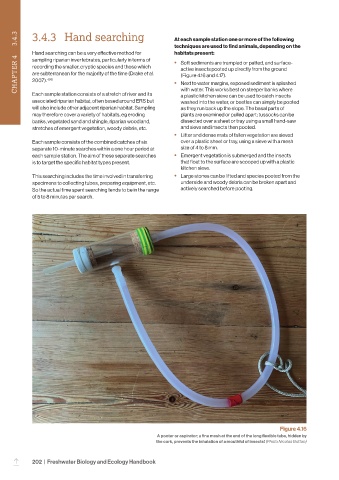
                                                                active insects pooted up directly from the ground
            are subterranean for the majority of the time (Drake et al.
                                                                (Figure 4.16 and 4.17).
            2007).
                  (66)
                                                                with water. This works best on steeper banks where
            Each sample station consists of a stretch of river and its
                                                                a plastic kitchen sieve can be used to catch insects
            associated riparian habitat, often based around ERS but   •  Next to water margins, exposed sediment is splashed
                                                                washed into the water, or beetles can simply be pooted
            will also include other adjacent riparian habitat. Sampling   as they run back up the slope. The basal parts of
            may therefore cover a variety of habitats, eg eroding   plants are examined or pulled apart; tussocks can be
            banks, vegetated sand and shingle, riparian woodland,   dissected over a sheet or tray using a small hand-saw
            stretches of emergent vegetation, woody debris, etc.  and sieve and insects then pooted.
                                                              •  Litter and dense mats of fallen vegetation are sieved
            Each sample consists of the combined catches of six   over a plastic sheet or tray, using a sieve with a mesh
            separate 10-minute searches within a one hour period at   size of 4 to 8 mm.
            each sample station. The aim of these separate searches   •  Emergent vegetation is submerged and the insects
            is to target the specific habitat types present.    that float to the surface are scooped up with a plastic
                                                                kitchen sieve.
            This searching includes the time involved in transferring   •  Large stones can be lifted and species pooted from the
            specimens to collecting tubes, preparing equipment, etc.   underside and woody debris can be broken apart and
            So the actual time spent searching tends to be in the range   actively searched before pooting.
            of 5 to 8 minutes per search.


                                                                                                   Figure 4.16
                                                        A pooter or aspirator; a fine mesh at the end of the long flexible tube, hidden by
                                                        the cork, prevents the inhalation of a mouthful of insects! (Photo Nicolas Button)


            202  |  Freshwater Biology and Ecology Handbook
      –

