


Page 157 - Freshwater-Biology-and-Ecology-Handbook
P. 157
The 5M classification (also known as National Rivers   become more numerous than tolerant indicators. The final
            Authority, NRA, classification) was revised in 1995 to   class limits were modified to suit operational experience –
            become the biological General Quality Assessment (GQA)   in this case some of the class boundaries for NTaxa were
            classification. This took advantage of an improved version   adjusted to reflect operational experience in the Scottish
            of RIVPACS (RIVPACS III) based on an enhanced reference   Highlands. RIVPACS IV involved a modest refinement of the
            dataset with many more reference samples, particularly from   reference dataset.
            headwaters. The GQA classification comprised 6 classes
            to give better resolution. The class boundaries were initially   Separate RIVPACS models for the Scottish Highlands
            set using the 5M approach, but then adjusted to better   and Islands were incorporated in the GB model and a few
            reflect operational requirements across the country. The   reference sites representing sites that were of a poorer
            class boundaries were now based on BMWP ASPT and   environmental quality were removed. Because the quality
            BMWP NTaxa only, as it was realised that BMWP-score   of RIVPACS reference sites varied from relatively pristine in
            was redundant. The development of this classification   the Scottish Highlands to heavily used and populated in the
            is described in Wright et al. (2000)  (44)  and it was used   English lowlands, the environmental quality that RIVPACS
            throughout the UK until 2006.                     predictions represent also varies.

            The next major refinement of river invertebrate assessment   For WFD status classification, the predictions were
            was the result of a new version of RIVPACS (RIVPACS IV)   standardised to a particular environmental quality referred
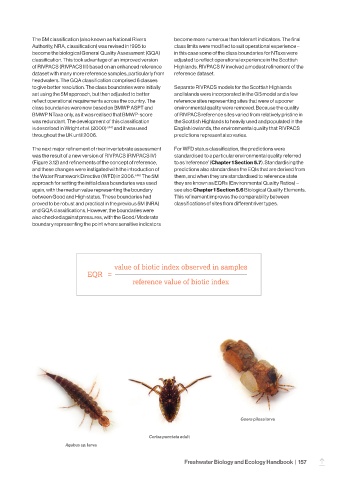
            (Figure 3.12) and refinements of the concept of reference,   to as ‘reference’ (Chapter 1 Section 5.7). Standardising the
            and these changes were instigated with the introduction of   predictions also standardises the EQIs that are derived from
            the Water Framework Directive (WFD) in 2006.  (46)  The 5M   them, and when they are standardised to reference state
            approach for setting the initial class boundaries was used   they are known as EQRs (Environmental Quality Ratios) –
            again, with the median value representing the boundary   see also Chapter 1 Section 5.6 Biological Quality Elements.
            between Good and High status. These boundaries had   This refinement improves the comparability between
            proved to be robust and practical in the previous 5M (NRA)   classifications of sites from different river types.
            and GQA classifications. However, the boundaries were
            also checked against pressures, with the Good/Moderate
            boundary representing the point where sensitive indicators


                                         value of biotic index observed in samples
                                EQR  =
                                                reference value of biotic index


                                                                                      Goera pilosa larva


                                                     Corixa punctata adult
                        Agabus sp. larva

                                                                  Freshwater Biology and Ecology Handbook  |  157
                                                                                                                 –

